How to Specify Bravat Shower Systems for Hospitality and Commercial Bathrooms
When selecting shower systems for hospitality, residential, or commercial applications, consider factors beyond just aesthetics. Key elements include valve type, water pressure management, user safety features, ease of maintenance, finish longevity, installation requirements, and future replacement strategies. This guide offers insights for architects, designers, contractors, and facility managers to assess Bravat shower systems throughout the project lifecycle.
Bravat shower systems are suitable for various project types. These include hotel guest rooms, luxury suites, spa bathrooms, apartment buildings, staff facilities, and busy commercial washrooms. The selection process should consider the intended use of the space, the frequency of fixture operation, maintenance requirements, and available wall or plumbing access.
A comprehensive shower specification should include more than just the visible trim. It needs to define the valve configuration, the type of shower outlet, whether thermostatic or pressure-balancing control is required, the rough-in conditions, the desired finish, expected flow rates, service access points, and coordination details with the plumbing engineer and installer.
The first step is identifying the intended use of the bathroom. A hotel guest room, resort suite, gym shower room, and commercial staff bathroom each require different levels of durability, user control, and maintenance access.
Hotel Guest Rooms
Comfort, temperature stability, visual design, and easy cleaning are major priorities.
Luxury Suites and Spas
Rain shower coverage, hand shower flexibility, and coordinated premium finishes are often important.
Fitness and Wellness Facilities
Frequent use, water efficiency, simple controls, and durable components should be emphasized.
Commercial Staff Bathrooms
Serviceability, replacement parts, and straightforward installation are key specification concerns.
Multifamily Properties
Repeatable installation, durable parts, finish consistency, and clear closeout records help support long-term operation.
Owner-Operated Facilities
Facility teams should review how the system will be cleaned, inspected, serviced, and documented after occupancy.
Choose the Correct Shower Configuration
Bravat shower systems offer versatile installation options to suit various design preferences and building requirements, including exposed, concealed, wall-mounted, and multi-outlet setups. The choice of configuration influences the initial plumbing (rough-in), the necessary wall depth, ease of access for service, and ongoing maintenance considerations.
Concealed Shower Systems
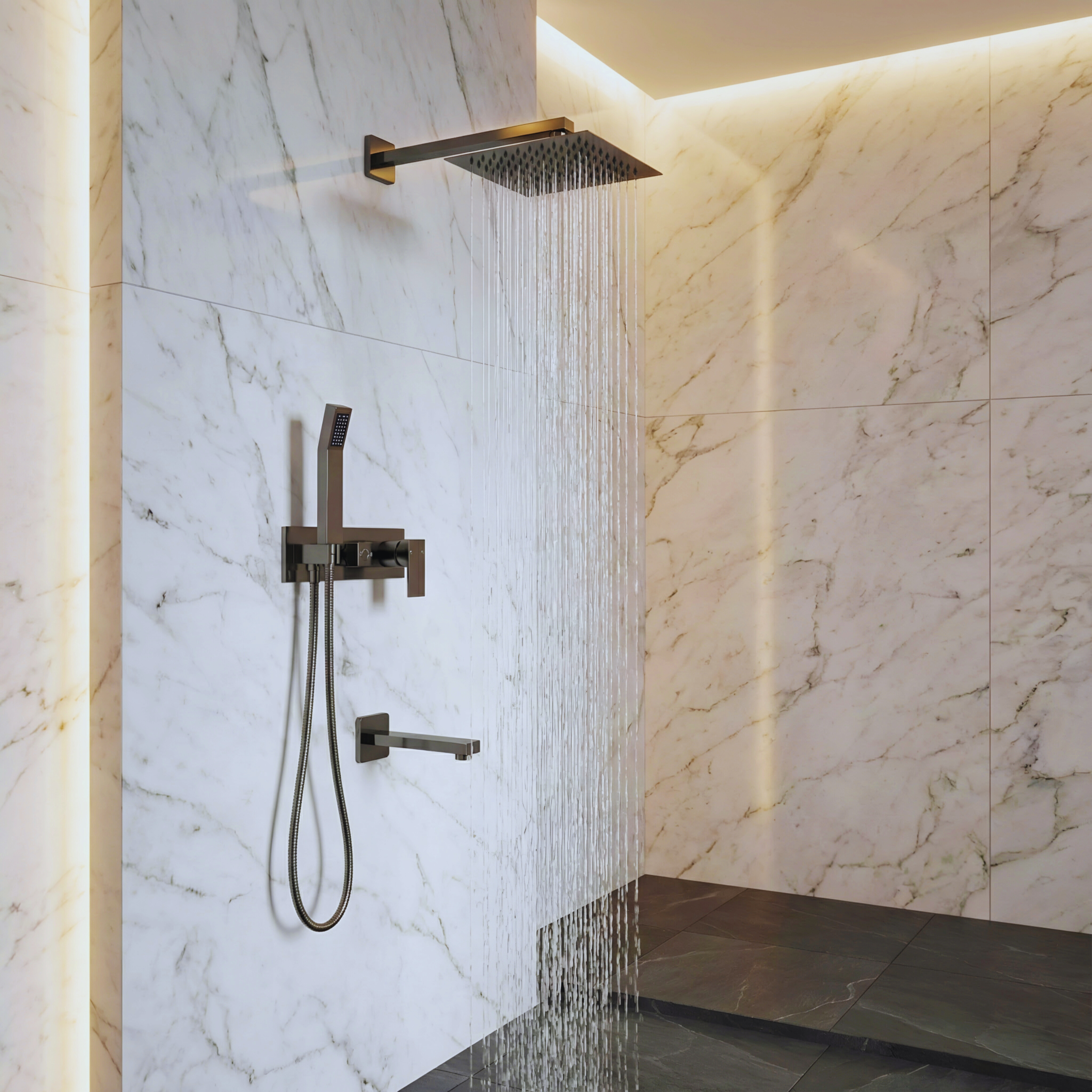
Concealed systems are frequently chosen for hotel bathrooms to achieve a streamlined aesthetic. In this setup, the main valve is housed within the wall structure, with only the user-facing components like the handle, spout, and showerhead visible. Proper planning and coordination are essential before the walls are enclosed to ensure correct installation.
Exposed or Wall-Mounted Systems
Exposed systems can be particularly advantageous for renovation projects or situations where accessing existing walls is challenging. They often facilitate simpler maintenance as a greater number of components remain readily accessible post-installation.
Multi-Outlet Shower Systems
Multi-outlet systems allow for integrated features such as rain showerheads, hand showers, tub fillers, and body sprays. It is important to verify that the building's plumbing infrastructure can adequately supply the necessary water flow and pressure for the intended number of active outlets.
Review Valve Type and Temperature Control
Selecting the right shower valve is a critical technical choice. The valve dictates how water temperature and flow are managed and how the system reacts to variations in building water pressure or temperature.
Thermostatic Control
Thermostatic shower systems are often chosen when maintaining stable water temperature and user comfort are key concerns. These are particularly suitable for environments like hotels, senior living communities, spas, and public restrooms, especially where users might be unfamiliar with the fixtures.
Pressure-Balancing Control
Pressure-balancing valves are designed to handle fluctuations between the hot and cold water supply pressures. They are commonly specified for residential and commercial showers needing standard protection against scalding.
Maintenance Access
The technical specification should clearly outline the process for accessing cartridges, check valves, filters, and other internal components. This is especially vital for hidden shower valve installations, as repairs can become challenging if the wall structure obstructs service access points.
Shower performance is influenced by factors such as water pressure, pipe dimensions, valve capabilities, showerhead flow rate, and the number of active water outlets. Before choosing an upgraded shower system, the design team should verify that the existing plumbing can accommodate the desired user experience.
Specification Item
Why It Matters
Project Review Action
Water Pressure
Low pressure can reduce spray coverage and user satisfaction.
Confirm available dynamic pressure with the plumbing engineer.
Flow Rate
Flow affects water use, comfort, and code compliance.
Match fixture selection with local water efficiency requirements.
Pipe Sizing
Undersized piping can restrict performance.
Coordinate rough-in dimensions and supply requirements before installation.
Multiple Outlets
Rain heads, hand showers, and body sprays may increase demand.
Verify whether outlets operate independently or simultaneously.
Specify Finish and Material Expectations
The choice of finishes impacts both the aesthetic appeal and the ease of long-term upkeep. For hospitality bathrooms, it's common to need finishes that complement items like faucets, drains, accessories, towel bars, and other hardware. Finishes such as chrome, brushed nickel, matte black, and brushed gold require careful consideration regarding their cleaning needs and how prone they are to showing water spots.
Finish Coordination
It is advisable to incorporate finish approval into the project timeline before purchasing materials. This step helps prevent the use of alternative finishes that might clash visually with other fixtures or accessories in the bathroom.
Cleaning Compatibility
Facility management teams should be informed about appropriate cleaning methods for the chosen finishes. The use of harsh chemicals, abrasive cleaning pads, or unsuitable cleaning agents can reduce the visual lifespan of shower trim and accessories.
Installation and Rough-In Planning
Bravat shower systems should be coordinated early with wall depth, waterproofing, tile layout, valve placement, shower arm height, hand shower bracket location, and access requirements. Poor rough-in planning can create alignment problems that become expensive to correct after tile installation.
Confirm Wall Depth
Concealed valves require sufficient space inside the wall cavity.
Coordinate Tile Thickness
Finished wall depth can affect trim fit and handle projection.
Set Control Heights
Valve and diverter placement should support comfortable user operation.
Plan Access
Maintenance access should be reviewed before walls are closed.
Verify Waterproofing
Valve penetrations, trim openings, and wall assemblies should be coordinated with the waterproofing sequence.
Document Rough-In
Approved rough-in dimensions should be stored with submittals and closeout records.
Maintenance and Facility Management Considerations
For hospitality and commercial settings, maintenance considerations are integral to the initial design process. The design team is responsible for evaluating the ease and speed of shower servicing, the availability of replacement parts, and the methods for cleaning and inspection by housekeeping and engineering staff.
Recommended Maintenance Review
Scheduled reviews by maintenance teams should encompass aerators, shower nozzles, hand shower hoses, check valves, thermostatic cartridges, diverters, and the condition of visible finishes. All relevant documentation should be kept with the facility’s plumbing fixture records.
Turnover Documentation
Upon project completion, the owner should be provided with comprehensive product details, installation guides, finish specifications, spare parts information, warranty documentation, and recommended maintenance procedures.
Use this checklist during schematic design, product review, submittal coordination, mock-up review, installation, and facility turnover.
Category
Specification Question
Responsible Team
Application
Is the system intended for hotel, spa, residential, fitness, or commercial use?
Architect / Owner
Valve Type
Is thermostatic or pressure-balancing control required?
Plumbing Engineer
Configuration
Will the system be concealed, exposed, wall-mounted, or multi-outlet?
Architect / Contractor
Water Performance
Can available pressure and pipe sizing support the selected system?
Plumbing Engineer
Finish
Does the selected finish coordinate with other bathroom fixtures?
Interior Designer
Access
Can serviceable components be accessed after installation?
Contractor / Facility Manager
Closeout
Will product data, installation guides, and maintenance records be delivered?
General Contractor
Best Project Fit and Specification Focus
Bravat shower systems should be reviewed by room type, user expectation, cleaning process, water delivery condition, and maintenance access. Different project areas may require different configurations even within the same building.
Project Area
Specification Focus
Recommended Review
Hotel Guest Rooms
Comfort, intuitive controls, finish consistency, and repeatable installation.
Confirm valve type, showerhead height, trim alignment, and housekeeping compatibility.
Luxury Suites and Spas
Rain shower coverage, hand shower flexibility, multi-outlet control, and premium finish coordination.
Frequent operation, durable controls, water efficiency, and accessible maintenance.
Review peak demand assumptions and select systems that support routine service.
Commercial Staff Bathrooms
Practical service access, standard replacement parts, and straightforward operation.
Coordinate exposed or accessible configurations where maintenance priority is high.
Multifamily Bathrooms
Repeatability, pressure balance, finish durability, and closeout documentation.
Coordinate unit schedules with riser design, approved submittals, and spare-part records.
Technical References for Project Teams
Project teams should confirm all product selections against current local codes, approved submittals, plumbing engineering documents, and manufacturer installation instructions.
Are Bravat shower systems suitable for hotel bathrooms?
Bravat shower systems can be considered for hotel bathrooms when the selected model meets the project’s design, pressure, finish, maintenance, and installation requirements. The specification should be coordinated with the plumbing engineer and contractor before procurement.
Should hospitality bathrooms use thermostatic shower systems?
Thermostatic shower systems are often preferred in hospitality bathrooms because they support stable water temperature and improved user comfort. The final selection should reflect local code requirements, project standards, and the plumbing system design.
What should be checked before installing a concealed shower system?
The installer should confirm wall depth, valve rough-in dimensions, waterproofing sequence, tile thickness, trim compatibility, supply connections, and access for future maintenance before closing the wall.
How can designers avoid finish mismatch?
Designers should approve all shower trim, faucets, drains, accessories, and visible hardware finishes together before procurement. This helps reduce mismatched tones across bathroom fixtures.