

Bravat Shower Systems for Luxury Bathrooms: Engineering Details Behind the Design
Luxury bathroom design is often judged by what the user sees first: the shower finish, the rain head, the trim geometry, and the visual calm of the wall elevation. For architects, plumbing engineers, interior designers, contractors, and owners, the real measure of a luxury Bravat shower system is deeper: water delivery, temperature stability, valve logic, access planning, finish durability, drainage, waterproofing, and long-term serviceability.
This publication-ready AEC article explains the engineering details behind Bravat shower systems for luxury bathrooms, with specification notes for hospitality suites, premium residential projects, spa environments, multifamily upgrades, and high-end commercial interiors.

Luxury Shower Design Starts With System Engineering
A Bravat shower system for a luxury bathroom should not be evaluated as a decorative fixture alone. The shower is an engineered wet-area assembly. The visible trim, showerhead, hand shower, controls, and finishes depend on concealed elements such as the valve body, supply piping, wall depth, waterproofing, pressure stability, diverter logic, structural backing, and access planning.
Luxury performance is achieved when the user experiences steady water temperature, balanced flow, intuitive control, quiet operation, comfortable spray coverage, and finishes that remain easy to clean. For the project team, the engineering goal is to make the bathroom appear effortless while keeping every serviceable component documented and reachable.
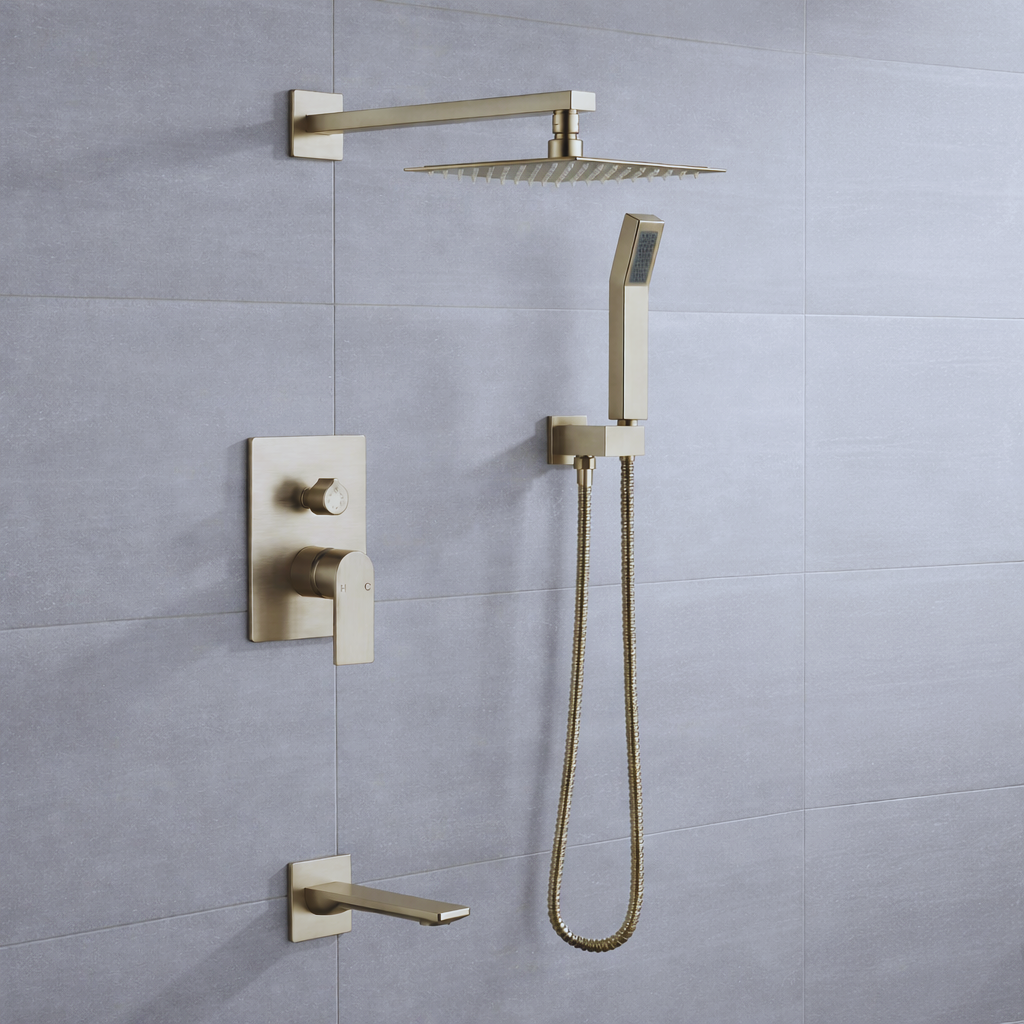
Engineering Details Behind a Luxury Shower System
The following technical categories should be reviewed before a Bravat shower system is approved for a luxury bathroom. Each category affects comfort, maintenance, installation quality, owner satisfaction, and long-term reliability.
Valve Architecture
Determine whether the project requires pressure balance, thermostatic control, volume control, diverter control, or a combined control layout. Valve choice drives rough-in depth, trim logic, and service access.
Spray Coverage
Luxury comfort depends on the relationship between showerhead size, user standing zone, mounting height, enclosure depth, water pressure, and any hand shower or body spray components.
Pressure Stability
Static pressure is not enough. The engineer should review dynamic pressure when other fixtures are operating, especially in hotels, multifamily buildings, and multi-outlet shower layouts.
Thermal Comfort
Thermostatic planning supports temperature consistency, anti-scald strategy, guest comfort, and a more refined user experience when flow or supply conditions change.
Waterproofing Interface
Luxury finishes do not protect the wall by themselves. Every valve, trim, outlet, bracket, fastener, and accessory penetration must align with the waterproofing method.
Service Access
A clean wall elevation should still allow future cartridge, diverter, check stop, hose, bracket, trim, and finish maintenance without destructive removal.

Valve and Control Logic: The Hidden Core of Luxury
The control interface is where engineering becomes user experience. A luxury shower should feel simple to operate even when the assembly includes a rain head, fixed head, hand shower, body spray, or tub outlet. The project team should document which control adjusts temperature, which control adjusts volume, and which control selects the active outlet.
For Bravat shower systems, concealed valves and premium trim can support a refined wall elevation, but the valve logic must be clear before the wall is closed. If a user cannot understand the controls, or if the diverter sequence feels inconsistent, the bathroom may look luxurious but operate poorly.
Control review questions
Can the user start the shower without standing under cold water? Does the trim clearly communicate outlet selection? Are temperature limits set during commissioning? Can the cartridge be serviced from the room side? Does the control placement support standing, seated, and cleaning use where applicable?
Luxury Shower Engineering Matrix
This matrix can be used by architects, engineers, and contractors during design development, submittal review, mockup approval, and field commissioning.
| Engineering Layer | Design Question | Luxury Performance Impact | Documentation Output |
|---|---|---|---|
| Valve body | Is the selected Bravat valve compatible with the wall depth, trim, outlets, and desired control logic? | Determines temperature stability, operation clarity, rough-in success, and future serviceability. | Valve schedule, rough-in diagram, product data, access note. |
| Water delivery | Do the supply lines support the showerhead, hand shower, rain head, or multi-outlet configuration? | Controls perceived pressure, coverage, rinsing comfort, and guest satisfaction. | Fixture schedule, pressure review, flow calculation, commissioning record. |
| Thermal control | Is thermostatic or pressure-balanced protection required for the project type and user profile? | Improves comfort, safety, and temperature predictability in premium environments. | Valve type note, temperature limit setting, commissioning checklist. |
| Wall assembly | Does the wall support rough-in depth, backing, waterproofing, finish thickness, and trim tolerance? | Prevents misalignment, leaks, trim gaps, and expensive rework after tile installation. | Wall section, elevation, waterproofing detail, inspection hold point. |
| Finish system | Do shower trim, head, hand shower, hose, drain, enclosure hardware, and accessories match the finish intent? | Protects the visual integrity of the luxury bathroom and simplifies owner maintenance. | Finish schedule, sample review, mockup photo log, O&M notes. |
| Maintenance access | Can the owner service cartridges, trim, outlets, hoses, filters, and brackets without destructive work? | Reduces lifecycle cost and preserves premium finishes after occupancy. | Access plan, spare parts matrix, closeout manual, warranty documentation. |
Spray Geometry, Coverage, and Enclosure Planning
Luxury shower performance depends on how water lands in the enclosure. A rain head should align with the primary standing zone, not simply the center of the room. A hand shower should support targeted rinsing, cleaning, and seated use. A fixed wall head should project far enough to avoid uncomfortable spray against the wall but not so far that it creates splash outside the wet zone.
Bravat shower systems should be coordinated with the shower footprint, glass enclosure, curb, linear drain, bench, niche, grab bar, and lighting layout. Spray coverage, floor slope, and drainage should be reviewed together because a visually impressive shower can still fail if water escapes the enclosure or drains slowly.
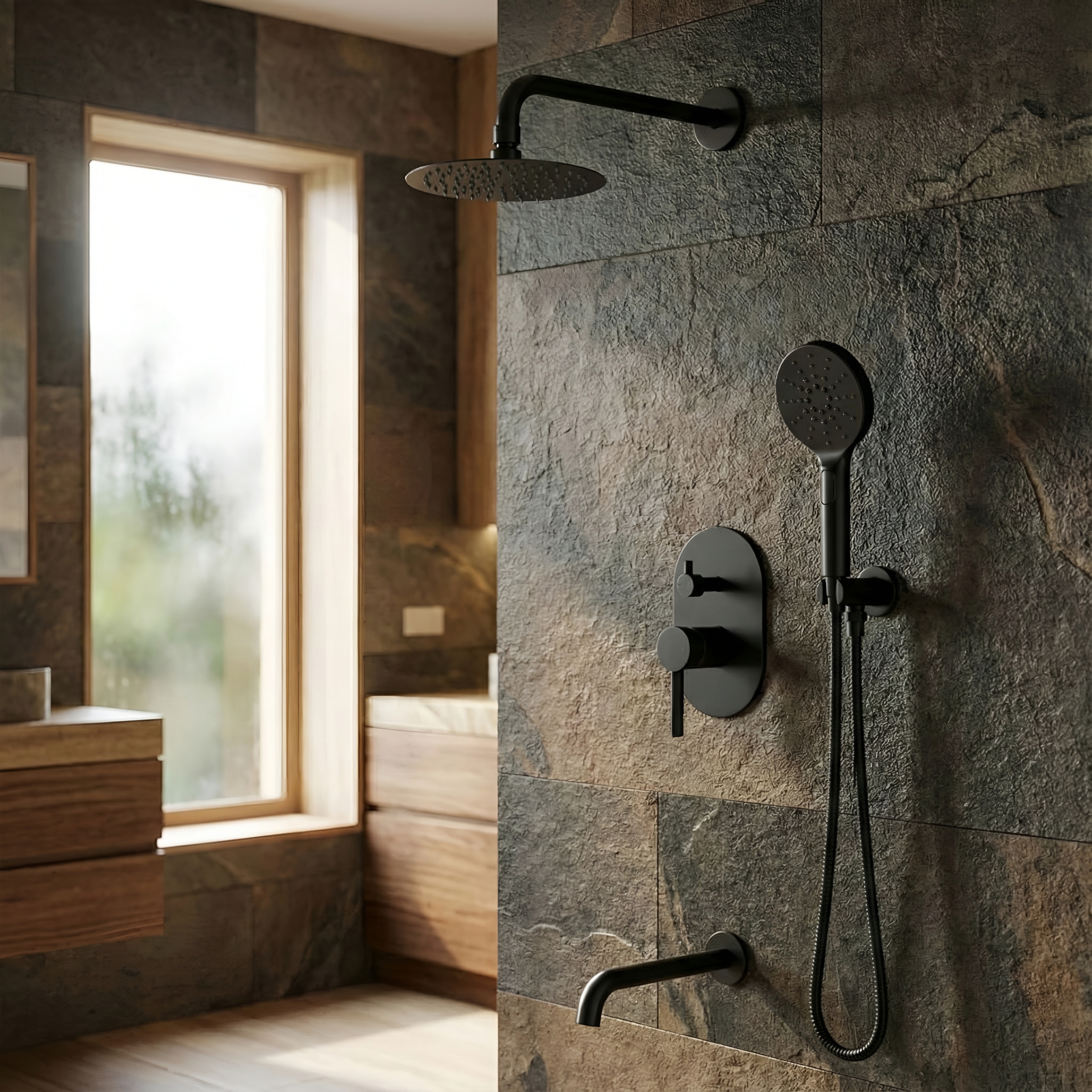
Water Efficiency Without Losing the Luxury Experience
Luxury bathrooms still need to respect project water budgets, code limits, owner sustainability targets, and green-building documentation. Showerhead flow rate should be reviewed with the complete user experience in mind. A lower-flow showerhead can perform well when the spray pattern, pressure range, head geometry, and user expectations are aligned.
The EPA WaterSense showerhead program is a useful reference for water-efficiency planning. ASME A112.18.1/CSA B125.1 is also relevant because it covers plumbing supply fittings and accessories including showerheads, hand-held showers, body sprays, bath and shower supply fittings, and related components.

Finish Durability and Maintenance Planning
A luxury finish must be coordinated with water quality, cleaning methods, housekeeping routines, and replacement part strategy. Chrome, brushed nickel, brushed gold, rose gold, gunmetal, oil-rubbed bronze, matte black, and satin brass can each create a different design language, but they should not be specified without maintenance guidance.
For Bravat shower systems, the finish schedule should include every exposed component: trim, showerhead, hand shower, hose, wall outlet, bracket, sliding bar, drain, enclosure hardware, robe hooks, and nearby bath accessories. In luxury bathrooms, mismatched finish families can make the shower look assembled from unrelated parts.
Owner handover note
Provide model numbers, finish codes, cleaning instructions, warranty information, spare parts, and access notes as part of the closeout package.
Accessibility, Comfort, and Future-Ready Use
Luxury bathroom design should support comfort for a wide range of users. Accessible or aging-in-place planning may require review of control height, hand shower reach, seat relationship, grab bar clearance, entry width, floor slope, threshold, and clear maneuvering space. Even when full accessibility compliance is not required, ergonomic planning improves user experience.
The U.S. Access Board guidance for bathing rooms is a useful reference when shower controls, hand-held shower spray units, seats, and grab bars must be coordinated. For high-end residential, hospitality, senior living, and wellness projects, a hand shower can improve flexibility when it is correctly located and paired with the right hose length.
Luxury Bathroom Mockups and Commissioning
A luxury Bravat shower system should be commissioned before turnover. The team should test temperature control, flow behavior, outlet sequence, user reach, trim alignment, splash pattern, drainage, leak protection, cleaning clearance, and service access. In repeated hotel or multifamily installations, a first-room mockup is often the best way to prevent repeated errors.
Commissioning should be documented with photographs, checklist notes, measured temperatures, outlet operation records, and any approved deviations. If the final product is changed during procurement, the mockup should be reviewed again because small changes in trim, valve body, projection, or finish can affect the completed installation.
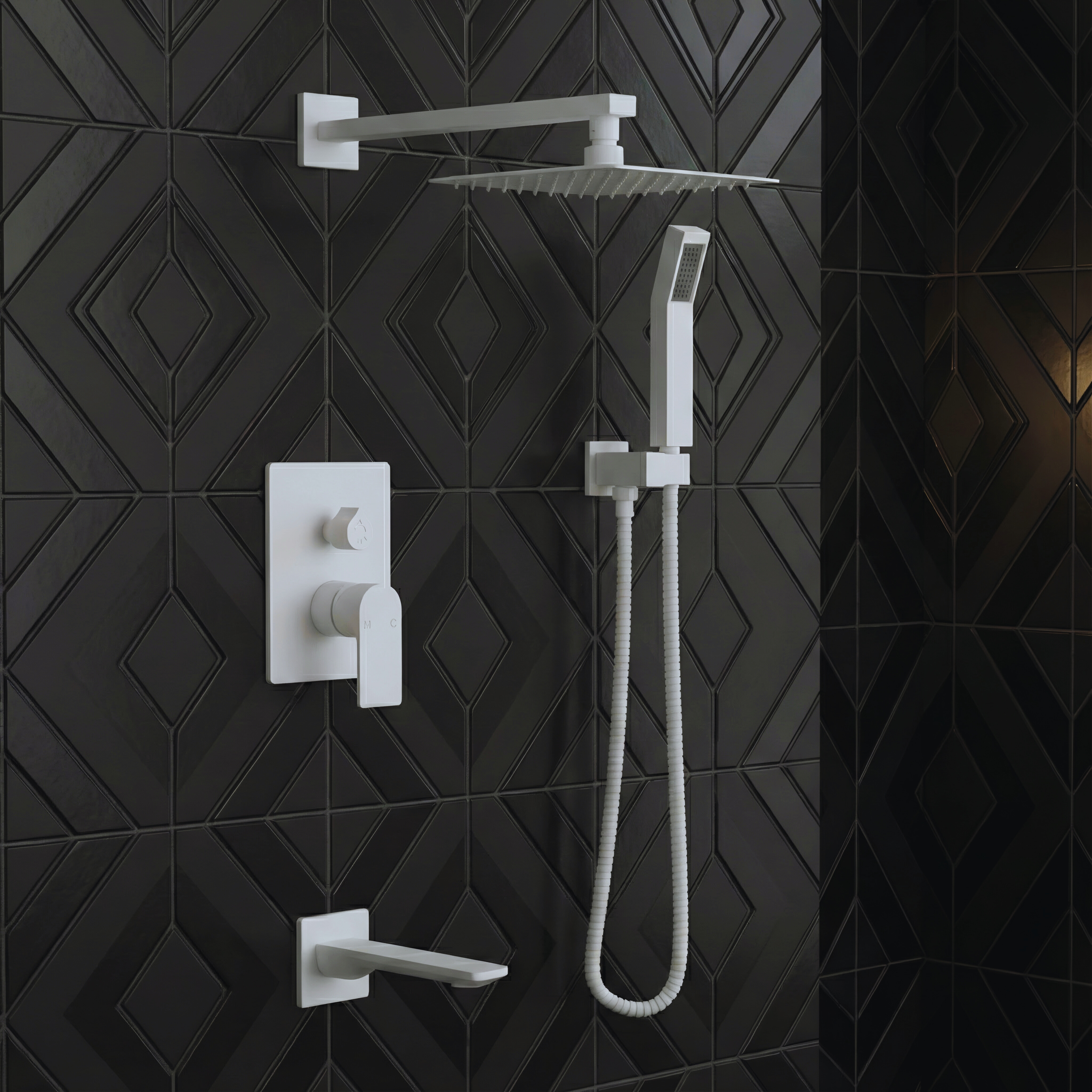
Common Engineering Mistakes in Luxury Shower Design
Designing From Finish First
Finish matters, but the valve, pressure, wall depth, waterproofing, and service access should be confirmed before the trim is finalized.
Ignoring Dynamic Pressure
Luxury showers often include multiple outlets. The system should be reviewed under realistic demand, not only static pressure.
Overcrowding the Shower Wall
Controls, brackets, niches, outlets, and accessories should be aligned to a clear elevation logic instead of placed as isolated objects.
Forgetting Cleaning Clearance
A beautiful wall elevation can become difficult to maintain if trim, brackets, hose loops, shelves, and corners are too crowded.
Skipping O&M Documentation
Owners need model numbers, finish codes, replacement parts, cleaning instructions, access notes, and commissioning records.
Not Testing the User Experience
Commission the actual shower. Test temperature, outlet sequence, hand shower reach, flow, splash, and drain performance before turnover.

Sample Specification Language
The following specification-style language can be adapted for project manuals, fixture schedules, or luxury bathroom design standards. Always verify final model-specific requirements with current Bravat product data and installation instructions.
Specification paragraph
Provide Bravat shower system as scheduled for luxury bathroom installation, including showerhead, valve body, trim, thermostatic or pressure-balanced control where required, diverter where required, hand shower, hose, wall outlet, shower arm, brackets, accessories, and finish-matched components required for a complete coordinated shower assembly. Contractor shall verify wall depth, supply pressure, rough-in dimensions, valve orientation, outlet sequence, waterproofing requirements, blocking, trim clearances, drainage, service access, and finish alignment before wall closure and final finish installation. Shower system shall be installed in accordance with manufacturer instructions, approved submittals, applicable plumbing code, accessibility requirements where applicable, and project waterproofing details. Contractor shall test temperature control, flow, outlet sequence, splash behavior, drainage, leaks, trim fit, and access before final turnover.
Related Resource Links
These references support luxury shower engineering, comparative product research, water-efficiency planning, accessibility review, and AEC shower specification.
Bravat Premium Shower Sets
Internal BravatShowers reference for premium rainfall, thermostatic, concealed, and luxury shower-system planning.
Open Bravat ResourceBravatShowers Main Page
Internal reference for Bravat showerheads, shower faucets, shower panels, shower systems, and bathroom fixtures.
Open BravatShowersFontanaShowers Luxury Shower Systems
Comparable reference for luxury shower assemblies, LED systems, rainfall systems, premium finishes, and high-end bathroom planning.
Open FontanaShowersBathSelect Shower Systems
Reference for luxury shower systems, digital shower systems, thermostatic systems, and coordinated bathroom fixture planning.
Open BathSelectJunoShowers Complete Shower Systems
Reference for complete shower systems, rain shower systems, wall-mounted systems, and integrated component planning.
Open JunoShowersAmerican Standard Rain Showerheads
Major-brand reference for rain showerheads, flow-rate examples, water-saving models, and showerhead comparisons.
Open American StandardEPA WaterSense Showerheads
Water-efficiency reference for showerhead performance criteria, labeled products, and sustainable bathroom water planning.
Open WaterSenseASME A112.18.1 / CSA B125.1
Technical standard reference for plumbing supply fittings, showerheads, hand-held showers, body sprays, and shower supply components.
Open ASME ResourceAccess Board Bathing Rooms
Accessibility reference for bathing rooms, shower controls, hand-held shower spray units, seats, and grab bar coordination.
Open Access Board