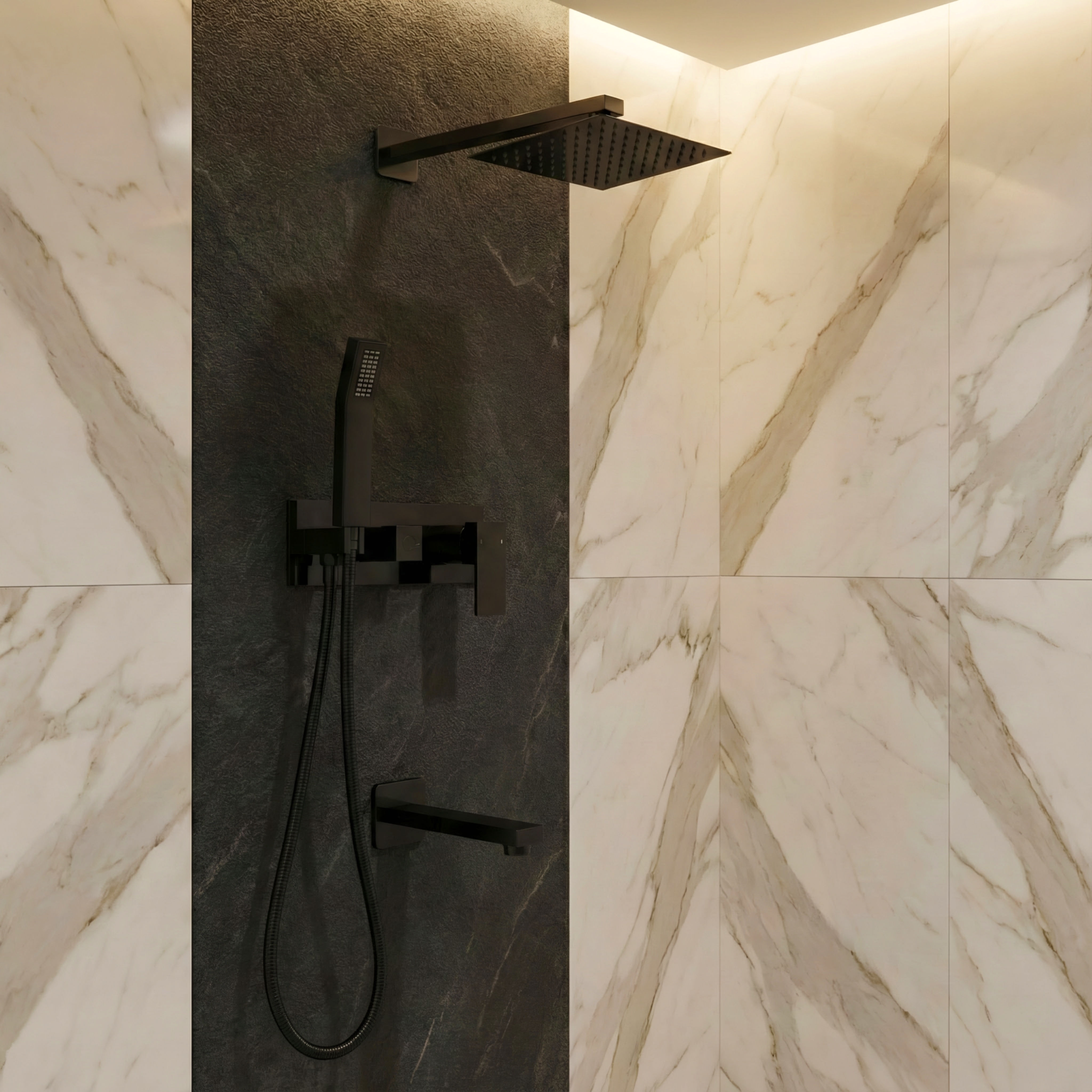
Technical Comparison of Bravat Hand Showers, Sliding Bars, and Fixed Shower Heads
Bravat offers three main types of shower fixtures: hand showers, sliding bars, and fixed shower heads, each designed to address specific functional and aesthetic requirements. When specifying Bravat fixtures for AEC projects, considerations such as user reach, spray pattern adjustment, accessibility needs, wall support structure, valve compatibility, water pressure levels, maintenance procedures, finish longevity, and future replacement plans are essential. This guide evaluates these fixture types from a technical specification standpoint, relevant for residential, hospitality, multi-unit residential, spa, healthcare-related, and commercial bathroom applications.
A fixed shower head offers a consistent spray position. A hand shower, connected by a hose, allows for adjustable spray direction. A sliding bar system integrates a hand shower with height adjustment, accommodating different user needs. The effectiveness of each system depends on matching it to the specific bathroom type, wall structure, user preferences, and maintenance strategy.
When selecting Bravat hand showers, sliding bars, or fixed shower heads, consider them within the context of the complete shower system. This selection should align with the chosen valve, diverter, shower arm, hose, bracket, necessary wall support, tile arrangement, desired finish, water conservation goals, accessibility needs, and all required project documentation.
The type of shower fixture influences how you control water flow and direction. Beyond aesthetics, consider the functional differences. A fixed showerhead offers straightforward, stable operation. A hand shower allows for more precise directional control. A shower with a sliding bar adds adjustability for height, accommodating a broader spectrum of user needs.
Hand Showers
A hand shower, connected by a flexible hose and mounted on a holder, offers versatile water direction for tasks like rinsing, cleaning, bathing while seated, assisting individuals with care needs, and providing convenience for guests.
Sliding Bars
A sliding bar system attaches to a vertical rail, enabling the hand shower's height to be adjusted. This feature accommodates different user heights and varying bathroom configurations.
Fixed Shower Heads
A fixed shower head, installed directly onto a shower arm or from the ceiling, provides a consistent water stream from a singular, stable position. This design typically involves fewer parts that can move or wear down.
Technical Comparison Matrix
The following table provides a side-by-side comparison for early design, submittal review, and owner decision-making. Final selection should always be checked against the specific Bravat model, approved plumbing documents, local codes, and manufacturer instructions.
Evaluation Area
Hand Shower
Sliding Bar
Fixed Shower Head
AEC Review Action
User Flexibility
High flexibility because the spray can be directed by hand.
Very high flexibility because the hand shower height can be adjusted vertically.
Lower flexibility because spray position remains fixed.
Match user flexibility to room type, accessibility goals, and maintenance expectations.
Installation Complexity
Requires hose, holder, elbow, and bracket coordination.
Requires hose, holder, rail alignment, wall backing, and fastener planning.
Usually simpler if the shower arm and wall connection are already coordinated.
Confirm rough-in height, blocking, finished wall thickness, and trim compatibility.
Accessibility Support
Useful for seated users and assisted bathing when properly located.
Strong option where adjustable spray height is needed.
May need supplemental hand shower for accessible or universal design rooms.
Coordinate with reach ranges, grab bars, seats, clearances, and controls.
Maintenance Exposure
Hose, washer, holder, and spray nozzles require inspection.
Rail, slider, hose, bracket, and fasteners require inspection.
Fewer moving parts, but nozzles and finish still require cleaning.
Document spare parts, finish care, nozzle cleaning, and replacement steps.
Best Project Fit
Hotels, accessible rooms, residential bathrooms, spa rooms, and cleaning-friendly showers.
Accessible rooms, family bathrooms, multifamily, senior living, hotels, and universal design projects.
Standard guest rooms, simple residential bathrooms, gyms, and spaces requiring stable spray position.
Schedule the fixture type by room type rather than using one default solution everywhere.
Bravat Hand Showers: Strengths and Planning Considerations
Hand showers offer versatile functionality for situations requiring flexibility. They enable users to easily rinse their bodies, clean shower enclosures, bathe children, accommodate seated bathing, and reach areas that fixed shower heads might not. In hospitality and multi-family developments, they can also enhance cleaning staff efficiency by allowing the spray to be precisely directed at walls, floors, and glass surfaces.
Technical Strengths
The key benefit lies in directional control. A hand shower can function as the sole water outlet or be integrated as a secondary option alongside a fixed shower head or rain head. Furthermore, when hose length, holder height, and control placement are carefully specified, hand showers can contribute to accessible design and aging-in-place solutions.
Specification Risks
Components like the hose, holder, elbow, washers, and finish are subject to regular movement and cleaning. Specifications should clearly define hose length, connection type, bracket positioning, finish, diverter operation, and available replacement parts. In environments with frequent use, particular attention should be paid to the durability of the holder and hose.
Bravat Sliding Bars: Adjustable Height and Universal Use
A sliding bar enables a hand shower to be repositioned vertically along a rail. This flexibility accommodates users of varying heights and supports diverse showering needs, including seated use, caregiver assistance, family sharing, and accessible configurations.
Technical Strengths
By offering adjustable height without the need for multiple water outlets, sliding bars allow a single shower fixture to serve multiple users while maintaining a streamlined wall appearance. They are frequently specified for hotel accessible rooms, senior living facilities, residential upgrades, multi-unit dwellings, and bathrooms designed for universal access.
Specification Risks
Proper installation of a sliding bar necessitates secure wall anchoring, precise rail alignment, appropriate fastener choice, and careful integration with tile patterns, grab bars, seating options, and shower enclosure hardware. The slider mechanism should offer effortless adjustment and maintain its position securely during operation.
Bravat Fixed Shower Heads: Simplicity and Stable Spray Position
Fixed shower heads are commonly chosen for standard guest rooms, residential bathrooms, gyms, and commercial shower spaces. They offer a user experience that people are familiar with and have fewer components that can move or break. Depending on the shower arm, plumbing connections, ceiling structure, and design preferences, these heads can be installed on a wall or from the ceiling.
Technical Strengths
When the shower arm, valve, water pressure, and shower enclosure are properly matched, a fixed shower head can make installation and upkeep more straightforward. They also eliminate exposed hoses and moving brackets, which is beneficial in high-traffic areas or settings where ease of use and minimal maintenance are important.
Specification Risks
When the shower arm, valve, water pressure, and shower enclosure are properly matched, a fixed shower head can make installation and upkeep more straightforward. They also eliminate exposed hoses and moving brackets, which is beneficial in high-traffic areas or settings where ease of use and minimal maintenance are important.
Water Performance: Flow, Pressure, and Spray Coverage
The performance of hand showers, sliding bars, and fixed showerheads is influenced by several factors: dynamic pressure, valve capacity, pipe dimensions, water flow rate, and the design of the spray outlets. Differences in the shower hose, spray plate, and the pattern of the water outlets can alter the user's perception of spray force and coverage, even when using the same control valve.
Flow Rate
Verify the project's approved flow rate. Confirm if the fixture needs to meet water efficiency targets, owner standards, or local code requirements.
Pressure Range
Assess the dynamic pressure during shower operation, particularly when using multiple outlets via a diverter or thermostatic control.
Spray Coverage
Examine the spray pattern to ensure it is suitable for the shower enclosure, user zone, drain placement, glass line, and desired comfort level.
Integrating hand showers and sliding bars into accessible and universal bathroom designs requires careful planning. The placement of these fixtures needs to align with other elements like shower seats, grab bars, controls, clear floor space, hose length, and the user's transfer path. Relying solely on a fixed showerhead might not offer sufficient adaptability for various accessible bathroom layouts.
Hand Shower Accessibility
A hand shower, when equipped with an adequately long hose and a conveniently positioned holder, can effectively support users bathing while seated and facilitate caregiver assistance. Furthermore, the diverter and temperature controls should be intuitive and simple to operate.
Sliding Bar Accessibility
While a sliding bar enhances adjustability, its installation must avoid interfering with grab bars or necessary clearance zones. The wall structure supporting the bar should be engineered to withstand consistent adjustments, regular cleaning, and typical user interaction over time.
Each type of fixture has its own installation requirements. Hand showers need their hose and holder to work together. Sliding bars necessitate proper wall backing and alignment of the rail. Fixed shower heads require precise placement of the shower arm and coordination with the finished wall depth. It's advisable to assess all three before finalizing tile, stone, waterproofing, or prefabricated wall panels.
Installation Item
Hand Shower
Sliding Bar
Fixed Head
Field Verification
Wall Backing
Needed at holder or bracket locations.
Critical for rail fasteners and repeated user adjustment.
Needed at arm support or ceiling mount conditions where applicable.
Confirm backing location before wall closure.
Finished Wall Depth
Affects elbow, holder, and trim fit.
Affects rail mounting, bracket fit, and wall seal.
Affects shower arm projection and flange fit.
Coordinate tile, backer board, membrane, and trim tolerance.
Mounting Height
Should support hose reach and user comfort.
Should support adjustment range for multiple user heights.
Should align spray landing with the showering zone.
Verify in mock-up or sample room before repetition.
Waterproofing
Penetrations at holder and elbow require proper sealing.
Arm penetration requires proper seal at wall or ceiling.
Coordinate with waterproofing installer and tile contractor.
Maintenance and Lifecycle Considerations
The number of components requiring maintenance grows with increased movement and handling. Fixed showerheads typically involve fewer parts for inspection. Hand showers introduce hoses, washers, holders, and connection points. Sliding bars add rails, slider mechanisms, additional fasteners, and more surfaces that need cleaning.
Finish Care
Selecting finishes should align with existing cleaning and maintenance routines. Harsh cleaning pads, strong chemicals, and unsuitable descaling techniques can harm various finishes, including chrome, brushed nickel, matte black, brushed gold, and specialized coatings.
Spare Parts
Closeout documentation should detail specific product information. This includes model numbers, finish codes, hose lengths, bracket types, slider assemblies, washer specifications, showerhead flow settings, and a list of approved replacement parts.
Application Matrix by Project Type
Project requirements vary, influencing the most effective fixture strategies. While standardization simplifies procurement, site-specific enhancements might be needed to meet accessibility standards, improve cleaning processes, or elevate the guest experience.
Project Type
Recommended Fixture Strategy
Primary Benefit
Specification Note
Standard Hotel Guest Room
Fixed head, hand shower, or combined package depending on brand standard.
Balances guest familiarity, maintenance planning, and room consistency.
Validate spray location and cleaning access in the room mock-up.
Accessible Hotel Room
Hand shower with sliding bar or fixed holder, coordinated with seat and grab bars.
Supports reach, seated bathing, and assisted use.
Coordinate mounting height and hose length before rough-in.
Multifamily Bathroom
Fixed head for standard units; sliding bar or hand shower for universal design units.
Supports standardized maintenance with optional flexibility upgrades.
Document replacement parts by unit type and finish package.
Spa or Luxury Suite
Fixed rain head with supplemental hand shower or sliding bar.
Combines immersive spray experience with practical rinsing flexibility.
Review pressure, drainage, enclosure splash, and diverter sequencing.
Fitness Facility
Fixed head or durable hand shower depending on operational policy.
Supports high-use durability and simplified cleaning.
Confirm vandal resistance, fastener strength, and service access.
AEC Specification Checklist
Use this checklist during schematic design, design development, construction documentation, submittal review, mock-up inspection, and project closeout.
Check flow rate, pressure capabilities, valve compatibility, diverter function, hot water needs, and assumptions regarding simultaneous use.
Construction Coordination
Confirm wall support, rough-in dimensions, waterproofing measures, bracket placement, rail alignment, hose clearance, and accessibility for maintenance.
Resource Links for Further Specification Review
Use these resource buttons to compare fixture categories, review performance guidance, and support product documentation during specification and submittal review.
What is the main difference between a Bravat hand shower and a fixed shower head?
A Bravat hand shower provides flexible spray direction through a hose and holder, while a fixed shower head delivers water from a stable mounted position. Hand showers are better for rinsing, cleaning, and accessible use, while fixed heads are simpler and have fewer moving parts.
When should a Bravat sliding bar be specified?
A sliding bar should be considered when users need adjustable spray height, such as accessible rooms, family bathrooms, senior-oriented housing, multifamily projects, hotel rooms, and universal design showers.
Are fixed shower heads easier to maintain?
Fixed shower heads usually have fewer moving components than hand showers or sliding bar systems. They still require nozzle cleaning, finish care, and periodic inspection for scale buildup, leaks, and spray-pattern changes.
Can hand showers and fixed heads be used together?
Yes. Many shower systems combine a fixed head with a hand shower. The design team should confirm diverter logic, valve capacity, pressure, flow rate, hose location, and user operation before procurement.
What should be checked before installing a sliding bar?
Before installing a sliding bar, confirm wall backing, fastener locations, rail alignment, tile layout, waterproofing, grab-bar conflicts, hose clearance, holder movement, and final user reach.